Building Better Due Diligence in Tuna Fisheries - Lessons from Social Responsibility Work in South Korea

Across the global seafood sector, companies are under growing pressure to ensure that their supply chains are not only environmentally sustainable, but socially responsible.
Meeting that expectation means more than setting standards or signing pledges, it requires credible data, trusted partnerships, and a willingness to test new approaches.
That’s the driving force behind the Consortium on Social Risks in Seafood, a collaboration launched in 2023 by Conservation International (CI), LRQA, and FishWise, with support from the Walton Family Foundation and Walmart Foundation.
The Consortium was created to help seafood companies operationalize human rights due diligence (HRDD) across their supply chains — developing shared tools and frameworks to identify, assess, and address human and labor rights risks at scale. Central to their work has been the advancement and implementation of the Social Responsibility Assessment Tool (SRA) for the Seafood Sector, an increasingly adopted risk assessment tool that enables users to identify and assess human rights risks in fisheries.
Turning Collaboration into Action
As part of this global effort, the Consortium launched a series of pilot projects to demonstrate implementation in different supply chain contexts. Ocean Outcomes, working with LRQA, a leading global risk management partner, collaborated on the pilot which took place in South Korea — a critical area for tuna production and on its way to being a leader for social responsibility in the region.
South Korea ranks among the top five distant-water fishing nations, supplying seafood to the United States, Japan, and the European Union. The country has recently demonstrated a growing commitment to improving labor conditions within its fishing sector. For example, including amendments to its Plan for the Further Enhancement of Working Conditions of Migrant Fishers on Distant Water Fishing Vessels, intended to strengthen the labor rights of migrant workers, and one of Korea’s largest seafood companies taking proactive efforts to integrate social responsibility into their broader sustainability objectives. While this progress is encouraging, companies often lack meaningful interventions to translate policy into action — going beyond minimum compliance.
The South Korean pilot project was designed to address that gap: collect data directly with crew and on vessels to inform a specific and practical action plan that downstream supply chain actors can move forward. Without this direct engagement with workers, companies downstream in the supply chain often lack key contextual information to conduct human rights due diligence, nor do they have specific information to validate how their suppliers are doing against their codes of conduct, especially at the vessel level.
 Crew working onboard industrial tuna fishing vessels stop for a group shot during project work.
Data from the SRA contextualizes the findings into risk levels, which are then used to develop a specific action plan that downstream supply chain actors can sponsor to support their suppliers collaboratively to meet desired outcomes, rather than putting the burden entirely on the suppliers themselves.
How Partnerships Power Progress
To select pilot participants, the Consortium hosted a series of industry workshops introducing the SRA methodology. Seafood companies were invited to apply the tool in their key supply chains, with priority given to collaborative proposals that connected multiple tiers of the value chain.
The South Korea project emerged as a standout — a partnership bridging retail and supplier levels of the supply chain, with involvement from Whole Foods Market, Oddisea Super Frozen, and several Korean vessel and processing companies. The project also engaged local NGOs and government representatives, ensuring broad stakeholder input.
For participating companies, this was a funded opportunity to initiate HRDD efforts and participate in a risk assessment using a comprehensive tool with expert support. Many are seeking reliable ways to verify that suppliers meet their codes of conduct and to design interventions grounded in worker realities rather than assumptions.
On the Water: Ocean Outcomes’ Role
As a Consortium advisory committee member and a recognized leader in HRDD implementation, Ocean Outcomes was well positioned to lead the pilot in-country. O2’s trusted relationships with Korean industry, its experience conducting social responsibility assessments, and its regional presence allowed for swift coordination and meaningful engagement with crews, suppliers, and other local actors.
Working alongside LRQA, O2 conducted a representative sample of four South Korean flagged vessels and two processing facilities, interviewing more than 70 individuals including crew, owners and processing workers. The resulting data painted a detailed picture of working and living conditions onboard vessels and at processing facilities, as well as management systems and opportunities for improvement for suppliers and buyers.
 First-hand interviews with crews and captians, such as this one conducted by Ocean Outcomes, provide insight into what is happening on the water and support meaningful human rights due diligence work.
Preliminary findings were encouraging. Compared to other distant-water fleets in the region, South Korean companies have demonstrated effective management systems for quality and food safety — structures that provide a mechanism which can also be used to embed social responsibility practices into existing procedures and systems. The government’s active role, including participating in the project and discussions around ratifying ILO Work in Fishing Convention 188, has created an enabling environment for ongoing improvement.
A major success for this pilot was the scope — the project reached a scale that can be difficult in the distant-water longline sector, engaging multiple vessels and workers thanks to close collaboration between O2, Oddisea, Whole Foods Market, and Korean suppliers.
“Together, we’re raising the bar for what responsible sourcing looks like aligning supplier practices with our high standards and ensuring transparency from vessel to retail. These aren’t audits - they’re conversations, commitments, and real accountability. Our SuperFrozen tuna program isn’t just about quality and shelf life. It’s about ensuring human rights, decent working conditions, and verified traceability at every link in the chain.” — Renee Perry, VP CSR & ESG, Oddisea SuperFrozen
What We Learned — and Why It Matters
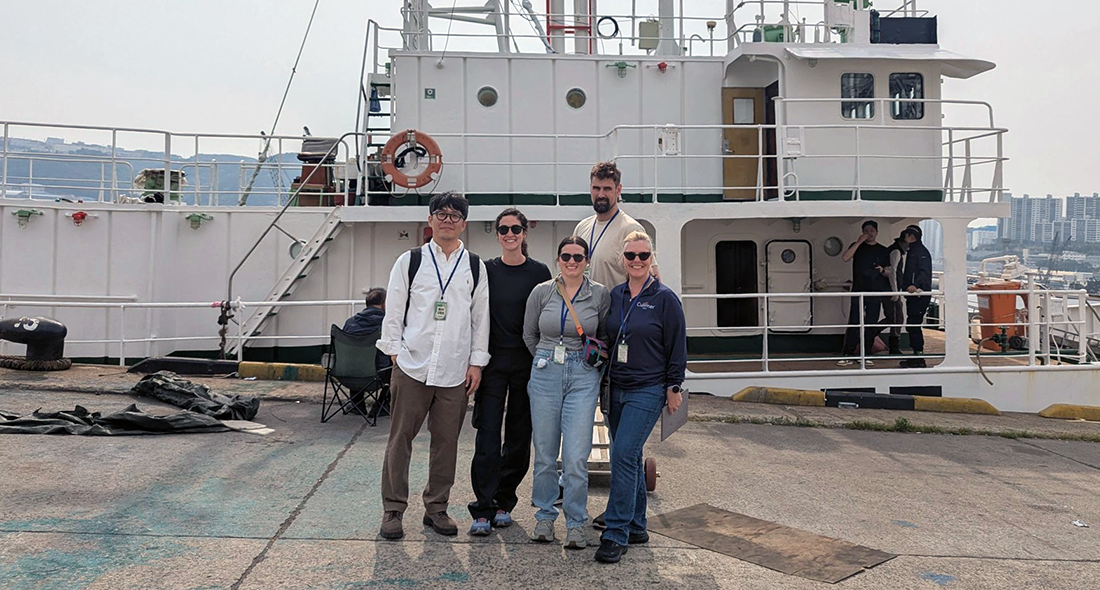 The project team from left to right: Doohyun Park and Gabby Lout from Ocean Outcomes, Emily McDuff and Dan Rand from Whole Foods Market, and Renee Perry from Oddisea SuperFrozen aboard a Korean longline vessel in Busan, South Korea.
The pilot underscored several lessons that will inform future HRDD efforts:
- Building local capacity will be essential to ensure sustained engagement with workers and continuous improvement. Worker-informed and worker-led processes must be central, as they provide the insights companies need to design targeted, effective interventions.
- While certifications like the Marine Stewardship Council remain a priority for seafood buyers, there is an increasing understanding at how this is limited to environmental sustainability, and new methods to look into crew wellbeing are needed in order to implement HRDD, especially in sectors and regions where human rights violations have been documented.
- Utilizing the SRA also allows for action plans to be developed according to the actual context of the fishery and the stakeholders involved, and facilitates engagement with key actors in industry — but also NGOs, government, and civil society, which helps to support a stronger foundation upon which to build.
The insights and data generated through the South Korea pilot fed into updates to the SRA tool and its associated documentation, as well as improvements to the Roadmap for Improving Seafood Ethics (RISE) platform. Future collaboration between O2 and the Consortium will focus on continuing to expand HRDD implementation and building a Community of Practice where companies, NGOs, and governments can share learnings and align approaches across the seafood sector.
This pilot was made possible through the generous support of the Walton Family Foundation, which funded the work in South Korea, and the Walmart Foundation, which supports the broader work of the Consortium on Social Risks in Seafood. Their commitment is helping partners like CI, LRQA, FishWise, and Ocean Outcomes advance a more transparent, equitable, and worker-centered seafood industry — one grounded in trust, collaboration, and data from the people whose work sustains it.