Human Rights Day 2025 - Advancing Decent Work in Global Fisheries

Across the global seafood sector, human rights have moved from the margins to the center of sustainability conversations—and rightfully so. This past year has especially underscored why.
High-profile investigations, including the Financial Times exposé “The dark truth behind supermarket tuna,” brought renewed attention to the lived realities of many fishers in the distant water fishing industry. The reporting documented excessive working hours, violence from senior crew, deception over wages, confiscated identity documents, and unsafe or delayed access to medical care. For many crews operating far from port, isolation remains one of the most persistent risks to health, safety, and human dignity.
Stories like these reconfirm an urgent truth and core tenant of our work: environmental and social responsibility are not separate efforts. Protecting workers is essential to protecting fisheries, and meaningful progress depends on both credible data and engagement with the people who make global seafood possible.
In honor of Human Rights Day, we recognize recent progress, highlight where collective action is emerging, and reaffirm our commitment to the individuals who spend months or years at sea with no access to communication, enabling conditions to access their rights, or basic services.
“These days, sustainability isn’t just about protecting fish stocks or the ecosystems. It’s also about making sure the people working in the tuna industry are treated fairly and with dignity.” - Dooyhun Park, Korean Fisheries Senior Manager
A Changing Landscape for Human Rights in Fisheries
 Rising expectations around social responsibility have accelerated the adoption of tools and approaches that help companies identify risks and strengthen protections for workers at sea.
Over the past decade, key approaches are being widely adopted, including integrating social criteria into Fishery Improvement Projects (FIPs), conducting vessel-level social risk assessments, and adopting more holistic human rights due diligence processes. New technologies are also expanding visibility into distant water fleets. Electronic monitoring and satellite Wi-Fi—as demonstrated through our Monitoring for Change project—support worker communication and can help monitor labor indicators. AIS and VMS data continue to illuminate vessel activity on the high seas, where isolation is closely linked to labor risk. Worker-centered training programs, such as our One-Forty partnership, further help crew understand their rights and navigate complex working environments.
“No single approach is enough, but together, they help create the broader conditions needed for safer, more transparent, and more equitable fisheries. This is especially important in Northeast Asia’s distant water fleets, which remain both high-risk and central to Ocean Outcomes’ focus.” - Dr. Gabrielle Lout, Social Responsibility Senior Manager
Growing O2’s Capacity for Human Rights Leadership
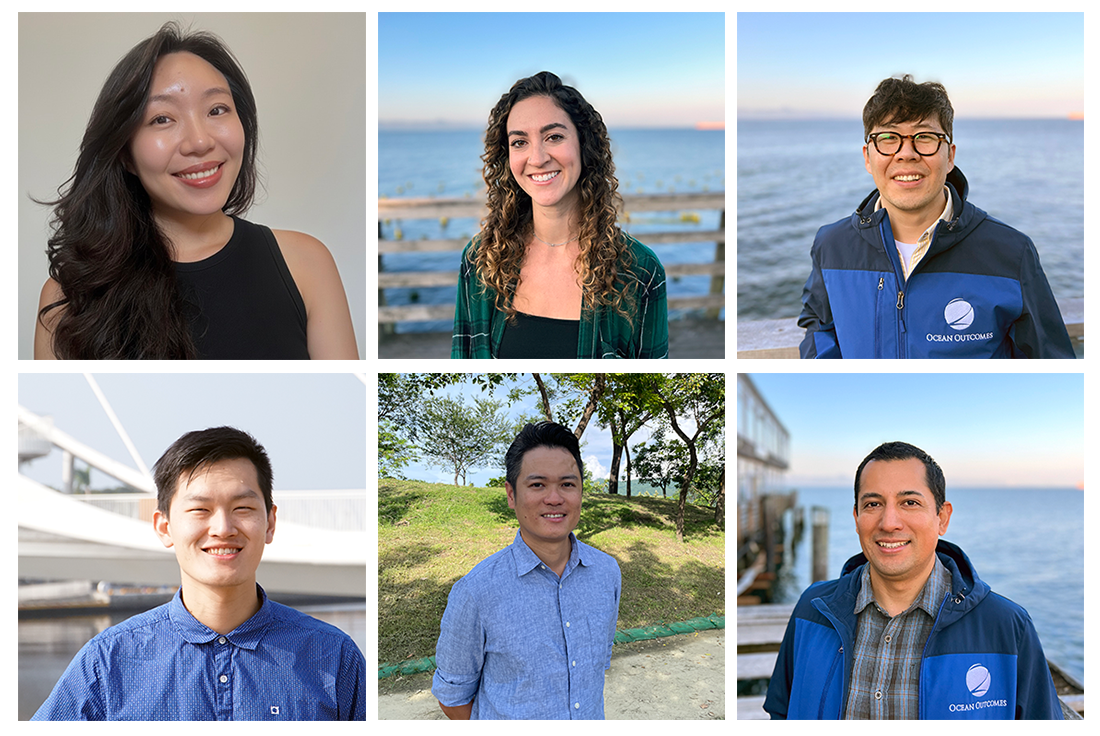 To meet the current moment, we’ve expanded our ability to support credible, worker-centered human rights due diligence.
To meet the current moment, we’ve expanded our ability to support credible, worker-centered human rights due diligence. This year, we welcomed Mei-Chin Juan as our Social Responsibility Coordinator, who brings more than a decade of experience working across Taiwan’s fishing sector. Her background spans vessel compliance, fleet management, and international fisheries negotiations, along with advanced academic training in criminology and corporate responsibility. Her on-the-water knowledge strengthens our capacity to advance social responsibility in practical realities.
Our Social Responsibility Senior Manager, Dr. Gabrielle Lout, continues to lead O2’s portfolio social responsibility work. A marine social scientist and human rights advocate, Gabby has extensive experience implementing diverse initiatives focused on decent work and supporting human rights due diligence across fisheries in Asia, the Americas, and the Pacific. She plays a key role in initiatives like the Consortium on Social Risks in Seafood, providing on-the-ground implementation of the Social Responsibility Assessment Tool (SRA) and thought leadership on the SRA revision, tools, and application. She also advises in the Ethical Tuna Collaboration and is leading the development of a project to build global capacity to implement human rights due diligence.
Additionally, we have four other staff who are qualified social responsibility assessors who understand the unique risks within the seafood sector and increase our capacity to advance responsible, evidence-based improvements across supply chains: Korean Fisheries Senior Manager, Dooyhun Park; Taiwan Fisheries Senior Manager, Ho-Tu Chiang; Taiwan Fisheries Manager, Kevin Lin; and Small Scale Fisheries Senior Manager, Iván Martínez-Tovar.
Learn more about our current staff here.
O2’s Commitment to Human Rights: Recent Impact
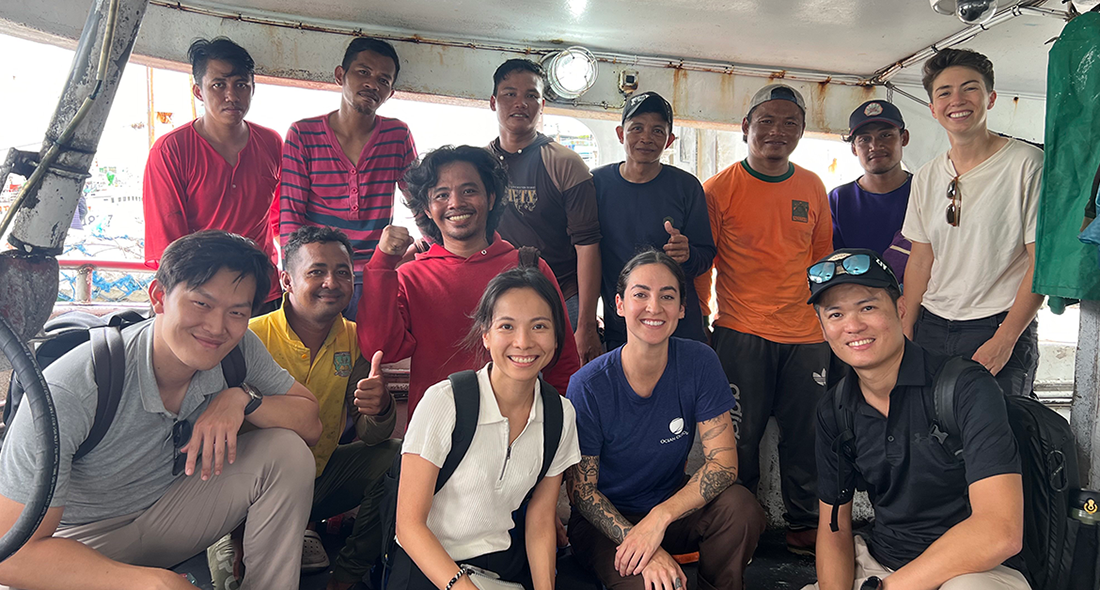 O2 staff and partners pose with crew onboard a Taiwanese longline tuna fishing vessel which is part of human rights due diligence efforts in the region.
Improving Crew Welfare with Technology: Electronic Monitoring and Wi-Fi Access for Crew
In partnership with The Nature Conservancy, Conservation International, Humanity Research Consultancy, and Global Fishing Watch, O2 contributed to a groundbreaking pilot to test how electronic monitoring and satellite Wi-Fi can improve labor conditions at sea. Electronic monitoring provided verifiable information to investigate labor indicators and resolve disputes. Wi-Fi allowed crew to communicate with their families, access grievance channels, manage financial information, and reduce the psychological stress associated with extended isolation.
Now with Phase 2 underway, O2 and project partners are currently expanding work from three to ten longline vessels. This phase is focused on building a scalable model for improving visibility through EM and strengthening worker well-being across distant water fleets through equitable access to Wi-Fi, aligning with recommendations established in the Model Operational Guidelines for Wi-Fi Access and Fishers’ Rights on Distant Water Fishing Vessels published by Global Labor Justice and the Wi-Fi for Fishers Now Campaign.
Advancing Human Rights Due Diligence Through the Consortium on Social Risks in Seafood
As an advisory committee member and in-country implementation partner, O2 played a central role in the Consortium’s South Korea human rights due diligence pilot. Working with LRQA and other partners, our team interviewed more than 70 crew and processing workers across four longline vessels and two processing facilities. The data helped generate a clear baseline of working conditions and informed a practical action plan grounded in crew experiences. The pilot also demonstrated the importance of building local capacity to support sustained worker engagement and helped inform updates to the SRA. This work represents one of the most comprehensive human rights due diligence pilots conducted in a distant water context to date.
Meeting Social Policy Requirements Within FIPs
In 2024, we supported the launch of the first Fishery Improvement Project (FIP) with the Taiwan Tuna Longline Association. The partnership covers 110 vessels and includes a commitment to implement the Human Rights and Social Responsibility (HRSR) Policy as part of FIP activities. Today, vessel owners and crew are participating in early social risk assessments, grievance communication, and training on rights and responsibilities. As the largest tuna industry association in Taiwan with over 400 members, TTLA has significant influence within the region’s longline tuna fisheries and their work on social responsibility as part of the FIP presents an enormous opportunity to strengthen crew protections and support safer working environments across the Taiwanese fleet.
Worker-Led Training With One-Forty
Our partnership with One-Forty expanded significantly this year. Together, we developed a worker-informed curriculum and delivered education and training to 53 migrant crew members across four Taiwanese longliners. Trainings covered labor rights, basic Mandarin, safety and first aid, and grievance channels. Additional resources, including videos and digital materials, were made available for crews to access onboard. Based on the success of early sessions, we’re exploring opportunities to expand this work to additional Taiwanese ports and potentially into South Korea, creating a regional model for supporting crew well-being.
Social Risk Assessment for Sajo, a First in Korea
Working with Sajo Industries, O2 implemented the country’s first Social Responsibility Assessment using the SRA tool in 2024. We conducted interviews with captains and crew, reviewed recruitment and vessel documentation, and collected data through vessel inspections and remote interviews. Findings highlighted opportunities to strengthen wage and benefit standards for migrant crew, improve access to grievance mechanisms, and develop systems for monitoring and remediating labor practices. Now, we are working in partnership with Sajo to implement improvements beginning in 2026.
Looking Ahead: Collective Responsibility for Human Rights at Sea
 The progress made this year across Taiwan, South Korea, and the wider region shows what is possible when governments, industry, civil society, and worker advocacy organizations work together. Importantly, it also shows what’s possible when crew voices guide the work.
At O2, we recognize the steps forward and remain clear-eyed about the scale of the challenge. Forced labor, unsafe working conditions, and human rights abuses remain deeply embedded in parts of the global fishing sector. Addressing them requires credible assessments, worker-centered approaches, strong accountability mechanisms, and a commitment to long-term collaboration.
We’re committed to advancing this work, building the capacity of our team, and partnering with industry and government to ensure safe, transparent, and equitable conditions at sea. Protecting the people who harvest our seafood is essential to resilient fisheries, thriving coastal communities, and sustainable seafood markets.
If you’d like to help us continue our work promoting human rights at sea, you can make a tax-deductible donation here.